Whether we realize it or not, we pick things up countless numbers of times a day. Lifting incorrectly repetitively or lifting something too heavy can be potential causes of injury, especially to the lower back. Low back injuries can be particularly debilitating, and affect the ability to sit, stand, walk, and sleep. Being mindful of proper lifting techniques can be helpful in potentially reducing injury risk.

How should I lift?
One of the biggest mistakes that people make with lifting is relying too heavily on their back and surrounding musculature. Our main musculature in our lower back serves to extend, or straighten the spine, as well as stabilize against unwanted excess movement, including twisting. For the most part, these muscles are typically of smaller stature with a fixed capacity for handling weight or load. In contrast, the legs are much stronger per cross sectional area, and have a greater capacity for pushing and pulling. Use these muscles to perform the majority of lifting tasks, not your back!
Another mistake people make when lifting is having the weight or object far away from them when lifting. The farther away an object is, the longer the lever arm that your body must overcome to lift or carry an object. The longer this is, the more strain on the muscles and joints of your body. Do yourself a favor and keep the object as close to your body as possible, no matter how awkward or cumbersome it may be!
Now that you have a general idea of proper lifting form, let’s practice!
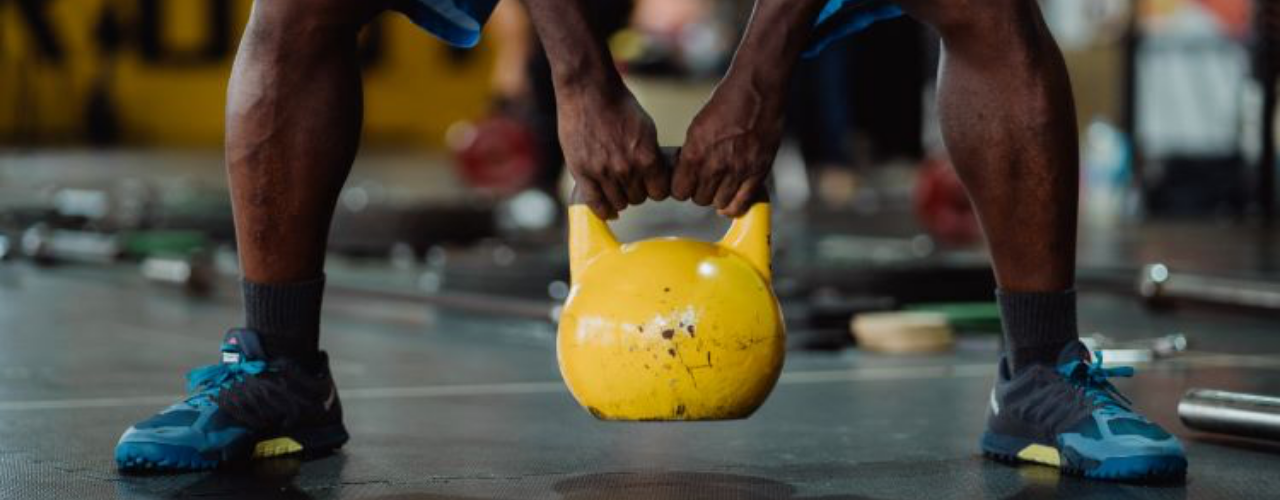
- Bring yourself directly over the object you choose to lift, standing directly over it so that it is directly under your body and in between both feet.
- Spread your feet wide apart to allow for a greater base of support. A wider base of support will allow you to move better through your hips and further assist in taking the strain off your back.
- Initiate the movement by performing a hip hinge. In short, this move allows you to maintain a flat back or neutral spine, and prevent an excessive forward flexed position. To perform, have a soft bend in your knees, and shift your glutes back until you start to feel a stretch in your hamstrings, the muscles in the back of your leg.
- Once the hamstrings have reached a max stretch, begin to squat toward the object or ground. You should find that you do not have to squat very deep to get the weight or object. Once your hands are around the object, push through your heels and stand up tall.
By performing this multiple times, you will notice something in particular; you feel it in your legs and not your back! Use this to your advantage. While it may feel awkward or uncomfortable at times, the more you try it the more natural it will feel.
Once you have the pattern down, incorporate it into your everyday training routine. Practice all parts of the movement to further ingrain the movement pattern into your body. Take a small dumbbell, place it in between your legs, and practice the lifting steps described above. Alternatively, grab a dumbbell and hold it in both hands, close to your chest. From a standing position squat up and down, contributing to the squat portion of the lift. For advanced lifters, practice a Romanian deadlift or good morning exercise with a barbell to practice the hip hinge. Don’t forget about your core as well! Adding planks, side planks, anti-rotation presses, and other core stabilization exercises can assist in maintaining a neutral back position and assist in lifting movements, especially with increased weight.
Back injuries can be debilitating, long-lasting, and keep you out of your normal rhythm. Small steps can go a long way in preventing injuries, so be smart about how you are moving. Take the extra few seconds to perform movements correctly, as it can save you plenty of time and anguish that would come with an injury. Whether it is a box, the trash, a fork dropped on the ground, or a heavy object, the lifting techniques described above can be applied. The more you treat everyday movements as athletic movements in the gym, the better you will move!
If you have any questions about this post or would like to speak with a physical therapist about an injury, give us a call at (978) 263-0007. We would be happy to answer any questions and discuss possible next steps.
Achieve Physical Therapy is currently open in Acton, Bedford, and Sudbury MA. We can see you in the office or by video treatment. If you choose to come into the office, we are following all CDC guidelines including the use of face coverings, cleaning, personal hygiene, and staggering patient appointments to limit how many people are in the office.