
Falls can lead to issues such as hip and arm fractures, and can cause you to become fearful of movement. Here are 8 things that you can do to improve your balance so that you can move with confidence.
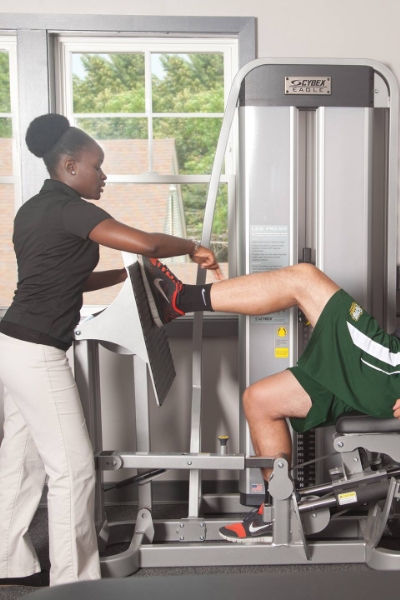
- Start Strength Training– Although they may seem like simple tasks, activities such as standing, walking, and climbing stairs all require a certain amount of strength in order to be done safely. When you don’t have the strength required to do them correctly, you change your form with the activity. This leads to an increased risk of falls. Incorporate some resistance exercises into your routine in order to build the strength needed for these activities. Try sitting and standing from a chair without using your hands to help. Aim for 3 sets of 10, and as you get better, try a lower chair or hold onto a weight while you do it.
- Work On Your Flexibility – We often don’t think of flexibility as important for balance, but it sure is. Joints such as your ankle need to have enough movement to react to different surfaces that you walk over and to raise up when climbing stairs so that your toe doesn’t catch on the step in front of you. It is also common for our spine to curve forward as we age, which makes us more prone to falling since our body weight is forward. It is important to address this forward curve and maintain an upright posture in order to stay balanced. Start a stretching routine in order to keep your flexibility. Yoga is a great option if you need some guidance with this routine.
- Challenge Your Balance– Take the time to work on your balance with balance-specific exercises. Challenging your balance by narrowing your base of support will improve it and make your brain familiar with these positions when you come across them in daily life. Try it out by going to your counter and stagger your feet diagonally in front of each other. Raise your hands an inch off of the counter so that you are not touching anymore, and keep that position for 30 seconds. Switch your lead foot and repeat. To progress, move your feet closer towards each other until your heel and toe are touching. And remember, keep those hands above the counter in case you lose your balance and need to reach out for something to hold on to.
- Wear the Right Footwear– Some types of shoes can set you up for falling. Sandals or flip flops pose a tripping hazard since they are more likely to get caught on an object and make you trip. Walking around in socks can also cause you to slip on a hardwood or tile floor. Opt for a sneaker that feels comfortable and provides some traction as you walk.
- Find the Right Assistive Device– People often think of assistive devices as either a cane or a walker, but there many different variations of each that may be more helpful for you. Talk to a physical therapist about what option may be best for you and your needs.
- See Your Doctors– Your overall health needs to be addressed in order for your balance to work properly. Make sure that you are in contact with your primary care physician and cardiologist to ensure that your heart is healthy. Vision is also important, so make sure that you have an up to date eyeglass prescription. And if you have any history of vertigo, a neurologist or Ear, Nose, and Throat doctor can be helpful to address those issues.
- Eat A Healthy Diet– Eating a healthy diet can help in making sure that diseases such as diabetes are under control. Diabetes affects the sensory nerves in our feet, which are an important balance system since it allows us to feel where our feet are in space. These nerves get more damaged if your diabetes is uncontrolled. If you have diabetes, keep tabs on your blood sugar levels and stay in contact with your MD if you are having any difficulties.
- Stay on Track with Your Medications– Along the same lines as the previous tip, stay on track with the medications that your MD has given you. These medications are important to keep you healthy and maintain the systems that help keep you balanced and moving. If you are having difficulty staying consistent with your medications, a pill box or setting alarms can help to remind you. If you are having side effects from the medications that are making you hesitant to take them, let your doctor know, there may be an alternative for you.
Taking these 8 steps will help to give you more confidence in your balance. Try them out and you will be on your way to moving around safely.
If you have any questions about this post or would like to speak with a physical therapist about an injury, give us a call at (978) 263-0007 or, use the contact form on our website. We would be happy to answer any questions and discuss possible next steps.
Achieve Physical Therapy is currently open in Acton, Bedford, and Sudbury MA. We can see you in the office or by video treatment. If you choose to come into the office, we are following all CDC guidelines including the use of face coverings, cleaning, personal hygiene, and staggering patient appointments to limit how many people are in the office.