


Staying Active Safely: Managing Summer Running Injuries
Staying Active Safely:
Managing Summer Running Injuries
Summer’s almost here! For many of you, that means a break from more formal athletic practices. While you may be tempted to avoid training altogether, we don’t recommend it–you don’t want to get deconditioned. However, summer is a great time to focus on cross-training or boosting areas of weakness or underperformance. Without the pressure of a dedicated practice schedule, you have the freedom to design your training program. This is especially true for runners, who might want to use the summer to boost their endurance and speed.
But with higher temperatures and more free time for longer runs, there’s also a greater risk of overuse injuries. Running is a great way to stay in shape, but if it’s not done with care, it can lead to injuries and pain that stop progress in its tracks. Fortunately, the team at Achieve Physical Therapy is here to help runners make the most of the summer months. We can help you prevent common running-related injuries–and provide expert care if one happens anyway.

Pain to Performance – Sean’s Path Back to Racing
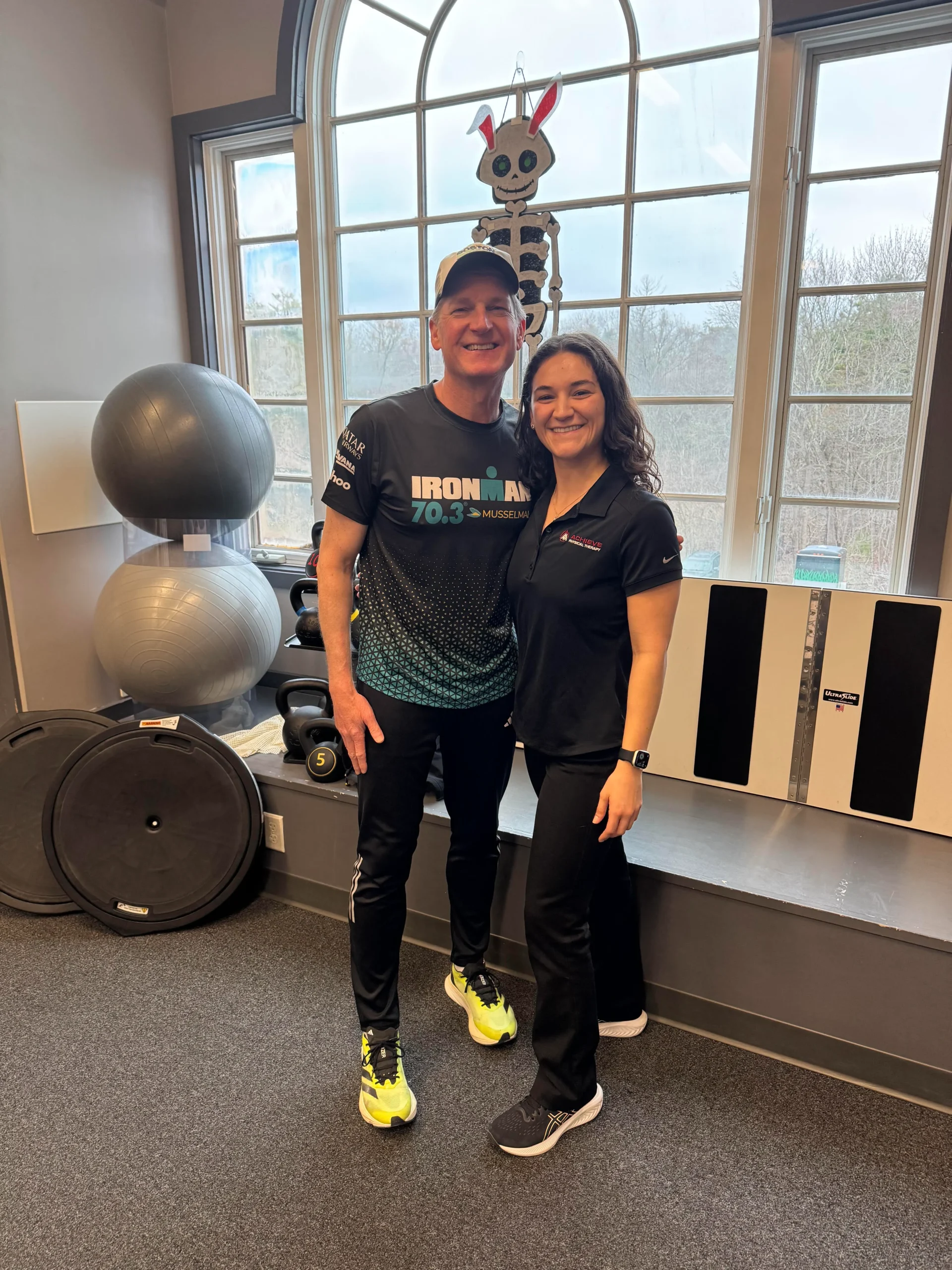
Triathlete Sean M came to Achieve Physical Therapy’s Sudbury location just two weeks before his 6th Ironman race, dealing with a painful hamstring strain that had brought his training to a sudden stop. Working with Stephanie S, PT, DPT, Sean began a focused treatment plan to reduce acute pain through manual therapy and then progress into strengthening the injured tissue. Their plan emphasized hip stability, core strengthening, and dynamic multiplanar movements to deload the strain and gradually rebuild his running capacity.
“Two weeks before my 6th Lake Placid Ironman race, my running came to a halt, as I was having hamstring/glute pain. The problem had me questioning if I could finish the 26.2-mile run (the final leg of the Ironman, after the 2.4-mile swim and 112-mile bike) in only two weeks. Stephanie S helped me to be pain-free enough to get to the finish line of that Ironman and, over the next few months, got me fully back to pain-free running and doing my best in several triathlon and run races. One of the triathlon races I was able to finish first in my age group, only 2 months after my first visit at Sudbury Achieve. Thanks, Stephanie, and Sudbury Achieve Physical Therapy!”
Sean’s story is a testament to what’s possible with expert care, a personalized plan, and the determination to keep moving forward.


Stay tuned for more inspiring stories and helpful tips in our upcoming newsletters!
Running Injuries in the Summer: What You Need to Know
Most of the running injuries we see from student-athletes, particularly in the summer, are overuse injuries such as shin splints, runner’s knee, or tendinitis in the lower body. They develop gradually–you might only notice a slight discomfort during your run at first. But if left untreated, they can cause more severe issues. Understanding why running injuries occur is the first step in preventing them. Here are some of the most common factors we see at Achieve Physical Therapy:
- A Sudden Increase in Training: Starting a new workout routine or pushing your body too hard after a break can stress your muscles, tendons, and joints, putting you at risk for injury.
- Heat and Dehydration: Exercising in hot weather can lead to cramping, fatigue, and poor running form.
- Worn-Out Shoes: If you spend your summers running on pavement or trails, know that these surfaces can wear old footwear down more quickly, potentially setting you up for a foot or lower leg injury.
- Ignoring Early Warning Sign: Without a physical therapist monitoring you–and no competition on the schedule–it can be easy to brush off minor pain.
Preventing Running Injuries: Tips from Our PTs
The good news? You can avoid many running injuries with smart training habits and a little planning. Here’s what we suggest:
- Warm Up Before Every Run: A five-minute dynamic warmup boosts circulation and preps your muscles to work.
- Ease Into New Routines: Increase mileage by no more than 10% per week. Jumping from, say, 1 mile to 5 miles overnight is a fast track to injury.
- Choose the Right Shoes: Replace running shoes every 300–500 miles. Worn soles and thin cushioning can lead to new stress on the body and potential injuries.
- Mix Up Your Training: We know you love training, but be sure to mix it up with other exercises, such as cycling or strength training, to build strength, give your joints a break, and reduce your injury risk.
- Run When It’s Cooler: Early morning or evening runs lower your risk of overheating or dehydration.
- Stretch and Recover: Use foam rollers, stretch after running, and allow at least one full rest day per week.
- Listen To Your Body: If something hurts, stop. Don’t push through pain—it’s your body’s way of telling you something’s wrong.

Ian N
PT, DPT, Staff Physical Therapist
Ian received his Doctorate of Physical Therapy from Franklin Pierce University in 2022. Prior, he graduated from the University of Rhode Island in 2019 with his Bachelor’s degree in Kinesiology. He has experience treating patients from all ages and different activity levels with various injuries. His treatment approach focuses on motivating patients with a creative and unique exercise program specific to each individual patient,to meet the patients goals with confidence and set them up for success.
In his free time, Ian enjoys skiing, sailing and spending time with friends and family.
Managing an Injury: How Physical Therapy Helps
Of course, sometimes injuries occur despite our best intentions. Schedule an appointment with us if you start to experience a nagging pain or discomfort–especially during or after your run. We’ll review your symptoms and help you get to the bottom of things.
We’ll also create a personalized treatment program focused on:
- Reducing pain and inflammation
- Improving overall strength and mobility
- Correcting issues with your running form that might have contributed to your injury
- Developing strategies to help you avoid future injuries

Your Guide to Plantar Fasciitis

Addressing A Common Issue for Athletes
You step out of bed and feel a sharp pain in your heel. Worse, it comes and goes throughout the day, making it hard to keep up with your summer training routine. Sound familiar? It may be plantar fasciitis, a common condition that affects the bottom of your foot. It’s particularly common among runners and anyone who spends a lot of time on their feet.
What Is Plantar Fasciitis?
Plantar fasciitis develops due to small tears in the thick band of tissue (called the plantar fascia) that runs along the bottom of your foot. This tissue connects your heel bone to your toes and helps absorb impact during movement.
Signs and Symptoms
- Sharp heel pain, especially in the morning
- Pain that gets worse after long periods of standing or activity
- Stiffness in the arch of the foot
How to Prevent Plantar Fasciitis
- Wear Proper Shoes: Supportive, cushioned shoes help absorb impact and reduce strain on your feet.
- Stretch Your Calf Muscles: Tight muscles can pull on the plantar fascia and cause irritation.
- Don’t Increase Training Too Quickly: Easing into new running or training routines helps you avoid overloading your feet.
- Avoid Running on Hard Surfaces: Stick to grass or track surfaces (as opposed to cement or pavement) to reduce impact on the foot.
Physical Therapy Treatments for Plantar Fasciitis
Fortunately, physical therapy is an effective tool for managing plantar fasciitis. We offer several techniques that can help you resolve your pain and get back to your training routine–safely and effectively:
- Manual Therapy: Hands-on care helps improve blood flow and reduce tightness in the foot and calf muscles.
- Targeted Stretching and Strengthening Exercises: Exercises focus on your calf and foot muscles to relieve tension in the tissue and build support.
- Gait Analysis: We’ll assess your running mechanics and offer corrections to limit strain on your feet.
- Return-to-Sport Schedule: We’ll help guide you through safe training progressions so you don’t flare up symptoms again.
Think you might be dealing with plantar fasciitis? Let’s address it now before it turns into a bigger problem! Call Achieve Physical Therapy to book your appointment today.

Smart Sun Safety and Hydration Tips
June’s warm weather is perfect for outdoor activities, offering lots of opportunities to boost your physical health. However, navigating the challenges of sun exposure and hydration is crucial. Here’s how you can enjoy the outdoors while taking care of your health:
- Smart Sun Practices: Choose early morning or late afternoon for outdoor activities to avoid peak sun hours. Apply sunscreen, wear a wide-brimmed hat, and use sunglasses to protect against UV rays.
- Stay Hydrated: With higher temperatures, dehydration is a risk. Drink water consistently throughout the day, and always carry a water bottle during outdoor activities.
- Dress Appropriately: Wear lightweight, breathable clothing to keep cool and comfortable.
At Achieve Physical Therapy, we encourage you to enjoy yourself this June but always prioritize your health and safety. Use these tips to ensure a fun and healthy start to your summer!
Helping You Have a Safe, Fruitful Summer
Whether you’re training for a marathon or just trying to stay conditioned before school starts again, the Achieve team can provide you with the tools you need to avoid running-related injuries. Schedule an evaluation today and keep your stride strong this summer.